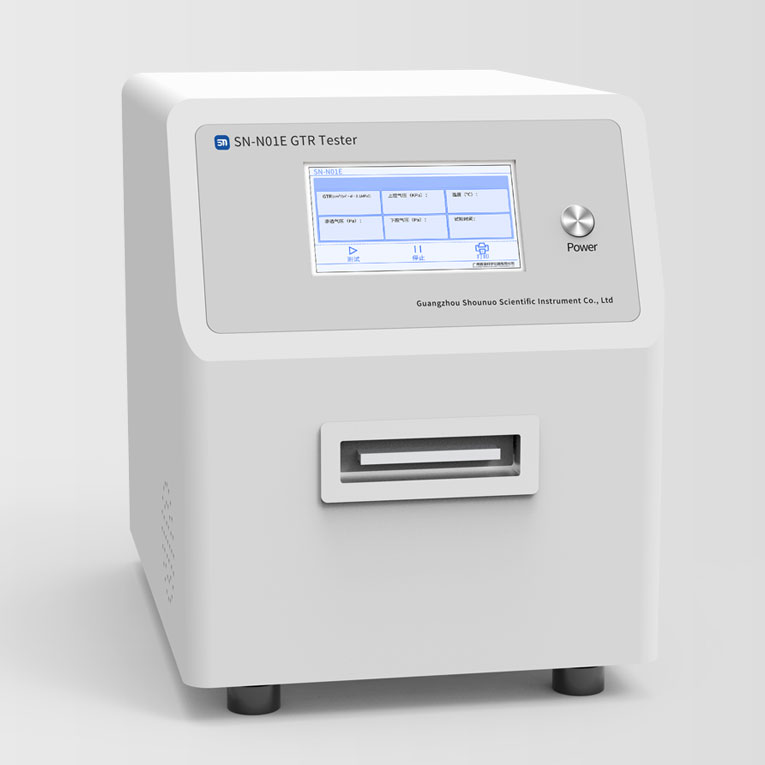
The gas permeability tester is mainly used to measure the O₂, CO₂, and N₂ permeability of films, sheets, packaging materials, etc., and is widely applied in industries such as food, pharmaceuticals, medical devices, and photovoltaic electronics. The accuracy and service life of the equipment largely depend on whether daily operation and maintenance are performed properly. The following content is concise and practical, making it easy to quickly grasp the core points.
| Period | Maintenance Content (Brief Operations) |
| Daily | Clean the test chamber and sample holder; remove debris and sealing grease; check the vacuum pump oil level and add special pump oil if insufficient. |
| Weekly | Wipe the chamber with a non-woven cloth dipped in anhydrous ethanol; clean precision small parts (nozzles, orifice plates, etc.) with a rubber bulb duster; do not wipe with cloth. Cover with a dust cover when not testing. |
| Monthly | ① Calibrate the instrument using standard films to ensure data accuracy; ② Check the hardness of the sealing ring (Shore A 50±5 is acceptable); replace immediately if out of range. |
| Every six months | Perform comprehensive maintenance on the vacuum pump (replace oil seals, bearing grease, and lubricating oil); it is recommended that this be carried out by professional personnel. |
When restarting the gas permeability tester after long-term shutdown: first power on and preheat for 30 minutes, purge the gas lines with dry air for 15 minutes, replace the pump oil, and then calibrate with standard films before use.
| Fault Phenomenon | Troubleshooting Steps (Try in order) |
| Abnormal test data | 1. Reinstall the sample and check whether the seal is intact; 2. Confirm that the test parameters (temperature, flow rate, etc.) are set correctly; 3. Restart the instrument and software, and reconnect after disconnecting; 4. Clean the dust from the sensor interface. |
| Software cannot connect to the instrument | 1. Check whether the data cable interface is secure, try replacing the cable or using a different USB port; 2. Confirm that the driver and software versions are compatible; 3. Turn off the instrument and computer, wait 30 seconds, then restart and power on in the correct order for reconnection. |
If the above operations are ineffective, please contact the gas permeability tester manufacturer for technical support in a timely manner; do not disassemble or repair the unit yourself.
Standardized operation, scheduled maintenance, and timely troubleshooting are the three fundamental skills for ensuring the stable operation of the gas permeability tester. Incorporating the above points into daily management will not only reduce downtime due to failures but also significantly improve the credibility of test data, providing solid support for quality control. Regular maintenance records also facilitate traceability and help in responding to audits.
Previous article:This is already the first article
Next article:Heat Seal Tester – Laboratory Sealing Simulator for Packaging Quality
BackScan
Add WhatsApp
Email
info@snlabtester.com
Business Inquiry
+86 13316049470
Free Hotline
+86 020-26221916